Blog Dog Training ~ Speaking Dog the Bark Busters Way!

Showing posts with label Dog Training. Show all posts

Monday, 12 February 2018

Being a responsible puppy owner

When people bring home a puppy it is a time of great excitement and fun for all the family. In previous articles, we have talked about the importance of training your puppy in a fun, gentle and consistent way from the very first day you bring him home. This involves the basics of toilet training, sleeping alone through the night, sit, stay, come when called etc.

In addition to these basics, it is also a good idea to bear in mind some other important factors that will help your puppy grow into a well-adjusted dog, living happily within your family, and being comfortable with meeting new dogs, people and experiences.

Separation
Many people choose to get their puppy at a time when they are going to be at home for a few weeks to allow the puppy time to settle in. This is a great idea as it allows you the chance to bond with your puppy, and for you both to learn about each other. It also means that you have time to start putting your toilet training plans into action, and you can be much more tolerant of the odd sleepless night if you don’t have to get up for work the next day!

During this period, it is very important that you separate from your puppy for short periods of time when he is awake. By doing this from an early age, starting with very short periods of a few minutes, and building up the time, your puppy will learn that you can be separated without anything bad happening to either of you. If you are using a crate, you could pop the puppy into his crate with a toy that he can chew to entertain himself for a few minutes whilst you disappear out of sight. Try not to rush back if you hear him crying, unless you are worried that he may genuinely harm himself. If you are not using a crate, create a safe, enclosed space for your puppy where he will have his bed, some water and a toy, and from where he can’t escape to follow you. By doing this regularly, and extending the time, you will be preparing your puppy for times when he will be alone in the house.

The next step is to leave the house. You can stay close and listen to how your puppy copes with this but, again, try to stick to your plan and don’t be tempted to rush back indoors as soon as you hear a whimper as this will teach your puppy that he can summon you back by crying. Clearly, the last thing we would want is a distressed puppy, but this should not be the case as you are not expecting anything unreasonable from your puppy, and he should calm down after a short time.

Keep extending the time, and extend your separation by going to the shops and returning home, or walk around the block…just enough that you are away from the house but not too far away. Listen out for sounds of crying before you open the door to re-enter the house. If your puppy is quiet, or even asleep, then you are making progress.

Unless you take some steps to teach your puppy to separate from you, you may be inadvertently causing the behaviour of separation anxiety and struggle to ever leave the house without him. A dog who can’t bear to be separated from his owners can become very stressed, create a nuisance for neighbours if he barks and whines throughout the day. This can lead to issues that may make your life miserable.

Rest and Sleep

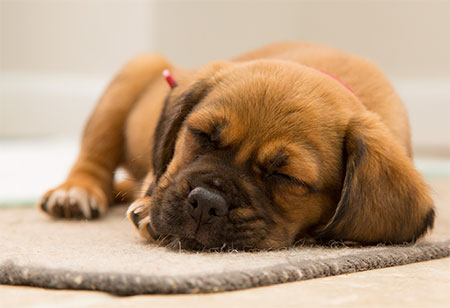
It is vital that your puppy is allowed to rest and sleep whenever he needs to. The immediate area around your puppy’s bed or crate should be for his use only. This will become his safe area. It is particularly important that children are taught the importance of allowing a puppy to sleep. If the puppy is resting in his bed or his crate, nobody should approach and disturb him. Puppies need lots of sleep. Bursts of high-energy play will usually be followed by a need to toilet, or to sleep, or both. You will find that a tired puppy will be much more difficult to control than a well-rested one. Excessive mouthing and other challenging behaviour can often be caused by a lack of sleep. Owners often call us out to ‘aggressive’ puppies when they simply have an overtired, over stimulated puppy.

Socialization and desensitization

Very early on, start to introduce your puppy to sounds and items that he will encounter on a regular basis. Introduce him to the vacuum cleaner, the hairdryer, the brush and the bath tub as soon as you can and as gently as you can. Handle his paws and toes on a regular basis to get him used to grooming and nail clipping. Make the experiences as pleasant and unthreatening as possible, so that you don’t create tension and cause your dog to fear these things. Before his vaccinations and before he is allowed out you can accustom him to sights and sounds in different parts of the home. Guide him to the places where you want him to explore and don't be tempted to pick him up too often as this can encourage unwanted behaviour. Even before he is allowed out on lead, you can start to accustom him to it. Encouraging him to walk inside the home will prepare him well before his big day out. 

Once your puppy is allowed out into the World, don’t overwhelm him or rush to socialize him with loud noises. The same goes for other adult dogs on the park. It only takes one bad episode to imprint into a dog's mind and this one episode could stick with him for many years to come. Speak to your veterinary practice to find out about puppy socialization classes where your pup can meet and play with other puppies. Using group classes for puppies can also be a good idea for socialising.

Keep your puppy on a lead for the first 12 months of his life, whether you are out in the street or at the park, so that he can’t rush up to unknown adult dogs. The reason for this is that puppies haven’t learnt the rules of dog socialization etiquette and can easily overstep the boundaries of good manners if they bound up to and leap all over an adult dog. This can result in them receiving a strong correction from the older dog, and may make them frightened of other dogs… something that will make your life more difficult than in needs to be! Do allow him to socialize with friends’ dogs, or dogs that you know to be friendly, but you should still keep him on the lead so that you can remove him from the situation should one of the dogs become overly assertive.

Please do enjoy your beautiful new puppy, but keep in mind that the foundations you build in the early months of his life will create the temperament and behaviour of the adult dog who will be with you for many years. Creating positive associations and teaching him kindly and consistently will create trust and respect from your dog that will stand you both in good stead for the years to come.

Bark Busters trainers have trained more than 1 Million dogs worldwide and are renowned authorities in addressing dog behaviour with all-natural, dog-friendly methods. Bark Busters training is the only service of its kind that offers International guaranteed lifetime support. With hundreds of trainers around the world, Bark Busters continues its mission to enhance the human/canine relationship and to reduce the possibility of maltreatment, abandonment and euthanasia. Contact your local Bark Busters dog trainer to see how they can help.
Friday, 9 February 2018

Are you under the paw?

You may have seen our recent article The Importance of Training your Dog where we talked about the importance of regular training sessions between you and your dog to maintain communication.

In today’s article, we are taking a light-hearted look at the training that takes place in lots of homes every day…where your dog is training you!

It might amuse you to know that, when our Bark Buster trainers visit dogs and their owners in their homes, one of the first things we are assessing is ‘who believes they are in charge here?’. By simply observing the behaviour of the dog and the owners whilst we are chatting and taking notes, we can see how well the dog has trained its owners. In fact, in most of homes we visit for behavioural issues, the dog believes he is in charge and the owners don’t know it! Often, once we point out to the owners the very subtle tell-tail signs, and they realize how silently and expertly they have been trained by their dog (and after we have all had a good chuckle about it), this is the point when owners start to see things from their dogs point of view, and have a new respect for their dog’s intelligence.

So, as a fun exercise, we decided to put together some examples of dogs who have used their intelligence to work out what they want to happen or what they want to achieve, and who have then gone on to successfully train their owners or to control situations to get what they want! These are all real-life examples of dogs practising their ‘human training’. Names have been changed to protect the identity of those kind enough to admit to being trained by their dog! We hope you enjoy them, and maybe you will see in these stories a reflection of your own reality!

  • "Merlin (border collie) is very good at asking my husband to let him out during the night, and then running back upstairs before him and stealing his place in bed!"
  • "This recent bout of very wet weather meant that Olly (Boxer) was coming home from walks very muddy. So, my husband started breaking a biscuit in half and throwing it onto the wet grass in the garden to clean Olly’s feet before he came onto the patio for washing. However, now that the weather is drier and he no longer has muddy feet, Olly still goes and stands in the middle of the grass waiting for his treat before he'll come onto the patio to be cleaned!! It works every time!"
  • "When Diesel (border collie) was alive his favourite toy was a tennis ball which he carried everywhere with him. But if you were eating something especially tasty for tea he would bring it over and offer an exchange."
  • "If I ever have new people over and they ignore Ozzie (Sharpei/Rottweiler/German Shepherd X), he will go and get Gromit (originally a hot water bottle cover so it's pretty big). He will continually shake Gromit into the visitor’s legs, and then lie on his back and wiggle around relentlessly until someone rubs his belly or says ‘hello’. Only once he is satisfied with the attention he has received will he lie down and go to sleep. Shutting him into another room doesn’t work as he can open any door!"
  • "Ashka (Malamute X) flips the indoor flap of my letter box to get my attention! He started doing it a while ago in the middle of the night, waking me and bringing me downstairs, so I taped it up. Assuming he’d forgotten, I removed the tape a couple of weeks ago. But He’s not forgotten! So, I come to the door thinking it’s the postman or a visitor knocking and there he is grinning at me waiting to be let into my office which he likes to lie in when a little anxious about storms/wind/fireworks etc."
  • "If Matty (border collie) wants to go out to toilet he will stand at the back door and wait as long as it takes for someone to open it (he is slightly slow on the uptake for a collie). However, if Jasper (border collie) sees Matty standing there, he will come and bark to tell us Matty wants to go out! Not sure whether it’s Jasper training us or our lovely simple boy, Matty , who has trained Jasper to get us?"
  • "King (German Shepherd) doesn't often ask to go out or come back in as he has unfortunately learnt to use the door handles himself, so he's pretty self-sufficient in that respect! But he gets us to respond anyway because we then have to go and shut the door after him. He also knows how to open the little gate we have between the patio and the lawn in the back garden and tries to turn the ring handle with his mouth to lift the latch. His current project is working on the baby (dog) gate. He stands up and tries to squeeze the buttons either side of the latch with his paws and lift the lever with his nose. Too clever!! I've had reports that, while he's at Playschool, he often opens the door to the garden and lets the dogs out - and back in again! Cheeky monkey!!"
  • "Snoopy (Labrador x) hates you looking at your phone! If you are holding your phone in front of you with both hands, his big black face will suddenly appear in front of your phone. His face will be in the way of the screen, and his tail wagging means that it’s impossible to read the screen as it is moving too much!"

These are just a few examples of dogs using their intelligence to get what they want and, in some cases, train and control you. There are many more methods not listed here! Try to observe your behaviour with your dog for 24 hours and make a note of incidences where you are responding to your dog’s demands.

Don’t panic if you have a long list! And if you have no behavioural issues from your dog, you can just regard these behaviours as amusing, quirky aspects of your dog’s personality that make you laugh and brighten your day!

However, where you are struggling with aspects of your dog’s behaviour, this may be the first place to start turning your relationship around and getting yourself back in control. The way to turn things around is simple. Be mindful of what you are doing at your dog’s command, and stop doing it! Ignoring attention-seeking behaviour, or demands from your dog. By not responding to your dog's demands you are communicating leadership to your dog in a passive way that he instinctively understands. He may sulk, or try extra hard for a few days to win his control back, but eventually the demands will cease once he sees they don't work anymore.

However, we don’t want you to ignore your dog completely! We want you to play with toys with your dog as this builds your relationship, uses his brain and gives him exercise and interaction with you. We want you to stroke your dog and walk him and feed him too, but all these interactions from now on must be instigated by you and not when your dog demand it. If your dog demands something from you, ignore him until he gives up and goes away. Wait 10 seconds and then call him back to play, eat, walk, have a cuddle. This may seem like a minor change to you but the message it sends to a canine brain is massive.

This simple step is the foundation to changing your relationship with your dog so that he begins to respect you rather than control you. It is easy to put in place and make the new behaviour part of your life. Once you have identified where the changes need to be made, the only thing to remember is to remain consistent.

In all aspects of dog training and behaviour consistency is the key


Bark Busters trainers have trained more than 1 Million dogs worldwide and are renowned authorities in addressing dog behaviour with all-natural, dog-friendly methods. Bark Busters training is the only service of its kind that offers International guaranteed lifetime support. With hundreds of trainers around the world, Bark Busters continues its mission to enhance the human/canine relationship and to reduce the possibility of maltreatment, abandonment and euthanasia. Contact your local Bark Busters dog trainer to see how they can help.

The importance of training your dog

When people buy a puppy, they take their responsibilities very seriously, ensuring that the puppy receives the necessary vaccinations, learns where to sleep, where to eat, and where to toilet. Then, when the puppy is ready and able to leave the house, they conscientiously attend puppy training classes every week for the first few months of the dog’s life.

Clearly this behaviour shows a responsible and conscientious attitude towards dog ownership, and is extremely commendable. However, as dog trainers & behaviour therapists we find that there is more to training a dog than teaching the basics in the early months of a dog’s life, and then assuming the work is done. Just like when we humans learn a new skill, unless we practise by using the skills regularly to reinforce our knowledge, we will forget much of what we have learnt. It is the same for dogs. Unless they practise, and repeat the behaviour of listening to your instructions, following what is asked, and receiving positive reinforcement from you, they will soon forget what they have learnt and what is expected of them.

Owners who don’t realise the importance of regular training sessions with their dog can sometimes see their dog’s level of obedience deteriorate. They can become exasperated by their dog’s behaviour, lose confidence and patience and become inconsistent in their commands and praise giving. This situation can quickly spiral downwards and is probably one of the main reasons why we see so many dogs being surrendered to rescues and shelters.

We often meet owners who are deflated and demotivated because their dog appears to lack basic levels of obedience whilst other dogs they meet are beautifully trained and a pleasure to observe. We would encourage these owners to take heart from the fact that we never meet a dog who is beyond help. Often, just a few weeks of regular training between a dog and its owner can reverse years of unruly behaviour, and reduce stress in both owner and dog.

Dogs are much happier and less stressed when they know what is expected of them and can trust that the leadership decisions of their owner will keep everyone safe. If you fail to behave in a way that lets your dog know he can depend on you to make the right decisions, he may start to make decisions for himself based on his own safety assessments. You need to know that your dog will listen to your commands over and above his own instincts. Only by regular and consistent bonding through training will you achieve this level of mutual trust and respect.

As with any new set of skills you want to acquire, start simple and progress from there. Firstly, try to do some basic training with your dog every day. Do exercises that he learnt as a puppy, or just some simple exercises like sit/stay or fetch. Make it fun, interactive and rewarding for your dog so that, whilst you know that you are training him, your dog is having fun listening to you, and being the focus of your attention. Doing this sort of training for short periods once or twice a day will help you to build a bond with your dog. He’ll also, hopefully, be receiving lots of praise from you, and your voice tones will let him know that you are happy with him. Be patient…your dog may not do the exercises successfully at first, but with time and practice he will improve.

Learn how to use your voice tones consistently. Dogs do not speak English so they will find it much easier to interpret your tone of voice. A light, happy voice tells him that you are pleased with him, whilst a gruff voice can communicate displeasure. Don’t mix them up by praising in a gruff voice…it’s the tone your dog will hear rather than the words.

A well-trained dog is a safe dog. So, once you have mastered the basics, try some of the more difficult exercises like recall (coming back when called) or stopping a dog in motion. Start in the house or garden where it is safe and secure, and practise repeatedly ensuring you praise success every time. Being able to recall or stop your dog in motion instantly and consistently could save his life.

Due to recent changes to dog laws, it has never been more important for dog owners in the UK to have their dogs under control. For the safety of both you and your dog, please try to start early when your dog is a puppy, and remember that training is an ongoing lifetime commitment. If you find that you are struggling, call in a professional who will be happy to help you. Bark Busters Home Dog Training therapists will always do their utmost to help you establish routines and communication with your dog to minimise the chances of your dog being one who is surrendered to the shelter.

Bark Busters trainers have trained more than 1 Million dogs worldwide and are renowned authorities in addressing dog behaviour with all-natural, dog-friendly methods. Bark Busters training is the only service of its kind that offers International guaranteed lifetime support. With hundreds of trainers around the world, Bark Busters continues its mission to enhance the human/canine relationship and to reduce the possibility of maltreatment, abandonment and euthanasia. Contact your local Bark Busters dog trainer to see how they can help.

Friday, 24 February 2017

Muzzle training for your dog

Muzzle training for your dogThere was a time when muzzles were considered the sign of a dangerous dog. Fitting a muzzle was a last resort for owners who could not trust their dog not to attack other dogs and/or people. Although muzzles are much more widely used these days for many and various reasons other than aggression, owners are often reluctant to use a muzzle as they feel that it will stigmatize them and their dog. However, muzzles can be useful in many ways and their use shouldn't be discounted.
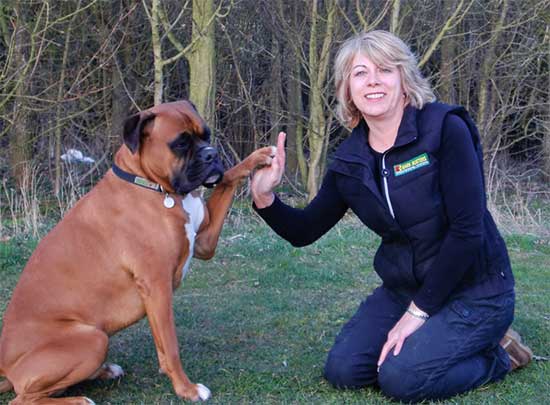
People generally are more willing to put time and effort into training their dog than they were in the past, and dogs are now, on the whole, sociable and acceptable canine members of our society. These days, UK legislation is much stricter and the penalties for dog owners so much harsher, so sometimes the use of a muzzle is a sensible and safe option. As a positive aid to dog training they allow owners to be more relaxed in the knowledge that, even if they lose control of their dog's behaviour, there may be no significant consequences. A muzzle can also be used to control a dog's habit of eating faeces (coprophagia) whilst out on walks. With the increased incidences of poison being maliciously laid to kill or harm dogs, a muzzle can be an invaluable tool to safeguard dogs who scavenge for food whilst out walking. They can be especially useful to groomers and vets who are handling dogs at close quarters in situations where the dog may be uncomfortable or even stressed.

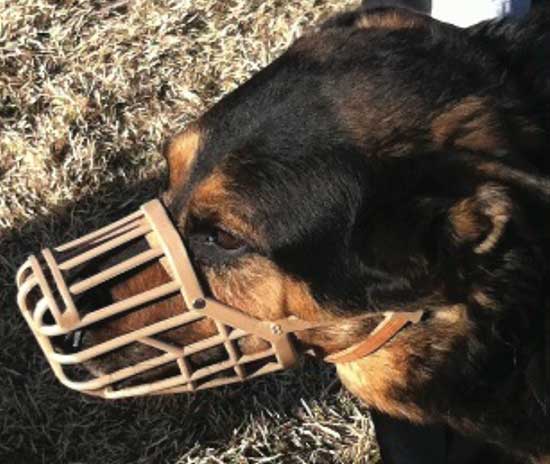
Bark Busters recommends a basket muzzle, either leather or vinyl, where possible. For dogs who show aggression or who scavenge whilst out on walks, a basket muzzle would be the most appropriate.

We do not recommend a steel muzzle as these are too dangerous and could hurt another dog or person. We also do not recommend a muzzle that encloses the dog's snout or mouth as these can restrict panting or drinking. These can be dangerous for dogs because a dog needs to be able to pant and drink through the muzzle.

Most dogs can be trained to wear a muzzle, and there is an argument that all puppies and young dogs should be introduced to a muzzle in case a situation ever arises where one becomes necessary – for example if a dog becomes stressed at the vets or at the groomers, or if a dog starts to show aggression in certain situations, due to fear. As with anything that we want to introduce to our dogs, planning is required. Be patient and consistent when introducing the dog to the muzzle to ensure that the muzzle has positive associations for your dog. The training should be undertaken over the course of a few days to enable your dog to become accustomed to having the muzzle near his face.

When training your dog to wear a muzzle, the whole experience needs to be pleasant and unthreatening. Don't rush the process. Your voice tones should be soft and happy and lots of praise given at every stage. It's also important to ensure that the muzzle you select fits your dog comfortably, as any pain will create a bad association and reverse any good work you have done.

Some people will introduce the idea of a cone to a dog before presenting the muzzle. This is a way of training a dog to put his nose into something that you are holding, without being worried about doing so. Every time your dog puts his nose into the cone he gets a treat reward and praise. This encourages your dog to want to insert his nose into items that you are holding for him, knowing that there will be a reward. You can change the items as you progress, for example, from a cone, to a child's bucket, to a mug, and eventually to the muzzle itself.

Others will go directly to the muzzle training. In either case, the following steps will help you to accustom your dog to wearing a muzzle:

Step 1

When first introducing the muzzle, allow him to place his nose inside without pressure from you. Don't try to fasten the muzzle at this stage. Begin by placing a dry treat inside the muzzle. Allow him to put his nose inside the muzzle, retrieve the treat, and withdraw his nose. Repeat this several times, moving the muzzle away from him so that he begins to follow the muzzle to retrieve the treat. Praise when his nose is in the muzzle, and remain silent whist the muzzle is off. This will help him to associate the muzzle with good attention.

Stage 2

Introduce treats into the muzzle that take a little longer to chew, or you could use a doggy paste that needs to be licked. The aim here is to enable you to hold the muzzle up to his nose for a longer period. Always praise when the muzzle is over his nose.

Practise this stage for a few days, two to three times per day for around 3 or 4 minutes each time. Once your dog is comfortable with you bringing out the muzzle, and happily puts his nose inside to eat from it, you are ready to progress to the next stage.

Stage 3

Practise feeding treats through the holes in the basket, still without fastening the muzzle around your dog's neck. Make sure you get it right so that your dog can eat the treats posted through the holes before you proceed onto the next stage.

Stage 4

Here we begin to attempt to fasten the muzzle onto your dog's head. Make sure you are armed with approximately 20 high value treats. Things like strips of chicken or small pieces of sausage work well. Place one treat into the muzzle, allow your dog to start chewing the treat and then fasten the strap of the muzzle. Immediately start feeding your high-value treats through the side holes, as you practised in stage 3. As you feed the treats, keep praising your dog. Once all treats are eaten, unstrap the muzzle and cease the praise.

Stage 4 should be repeated for a couple of days, extending the period of time that the muzzle is worn, until your dog can tolerate the muzzle for around 30 minutes. Don't worry if this takes longer than a couple of days for your dog. All dogs are different, and will accept things at different speeds. The important thing is that your dog ends up comfortable with the muzzle over his face. A good sign would be that he wags his tail happily when he sees the muzzle come out.

Keep up the good work by introducing the muzzle when your dog is doing something he enjoys. You may want to continue introducing treats occasionally, and always maintain the praise. If your dog seems to regress in his acceptance of the muzzle, don't get angry or frustrated, simply go back a couple of steps and start again from there.

You can teach your dog to drink water when wearing a basket muzzle by filling his bowl to at least 3 inches. Take him over to the bowl and waggle your fingers in the water, or scoop some water up to encourage him to drink.

If you are at all unsure about your dog's behaviour, muzzle training is a very good idea. An owner who is anxious and worried about what may happen when out on walks will be sending those stress signals down the lead to the dog. With the properly-fitted muzzle in place your dog cannot inflict any major damage onto other dogs or people, and you can therefore be more relaxed. A relaxed owner is more likely to be walking a relaxed dog – a situation that is healthier and happier for both.

Wednesday, 22 February 2017

How to greet a dog safely & politely

How to greet a dog safely and politelySince you are reading this, you are probably someone who likes dogs! You are certainly not alone. As Bark Busters dog trainers & behaviour therapists, we spend most of our time with dogs. This means that we constantly meet dog lovers, be they owners, children, or passers-by. So we thought we'd give you some advice on how to greet a dog safely and politely.
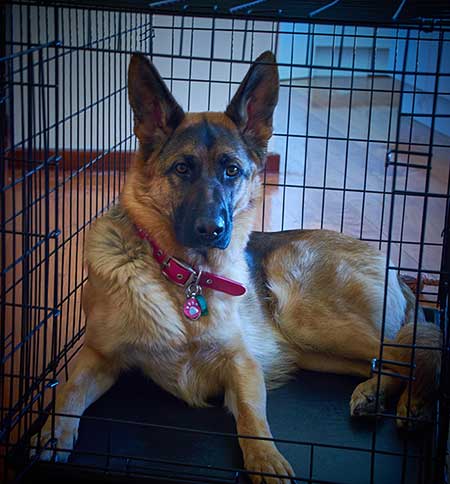
At the risk of stating the obvious, dog lovers love dogs! They love to talk to them, stroke them, scratch their ears and fuss them. That's great as long as you know the dog, the dog knows you and you have established this behaviour as being acceptable between both of you. However, this can become a potential problem when you assume that all dogs will love the attention and assume all dogs behave like this; especially with a dog you don't know. Your innocent actions could seem threatening to some dogs, so you need to be sure that you know how to act and behave around unknown dogs, and the reasons why, to ensure everyone's safety.

We must appreciate that the behaviour and body language humans display is very different to canine behaviour and could be regarded by canines as offensive and/or an attempt to threaten, challenge or control. Understanding that the behaviour we show when greeting, differs so greatly from a dog's behaviour, is the first step towards making your greeting of an unknown dog, safe, respectful and polite.

How dogs greet
Firstly, look at a greeting from a dog's viewpoint. Well-socialised dogs, meeting for the first time, will be making assessments based on canine behaviour. They see a dog and assess its body language from a distance. Then they may go towards the other dog and stop, still assessing its body language for signals to indicate whether it's relaxed, friendly or anxious, nervous, wary or a threat. A dog is also assessing the threat level of the other dog by its stance. This could be tail up, ears pricked, head up, proud stance, hackles raised, or maybe tail down, ears sideways or down, head lowered and even looking away? Depending on the signals a dog is showing could mean the difference between a confident dog, a nervous or aggressive dog or a relaxed dog with no threat at all. Some dogs may use submissive signals such as immediately dropping to the ground and laying on their back or side. If that's your dog, be happy that it is unlikely to get into trouble! The next step is that they sniff each other's faces and then go head to tail to check each other's signature smell from anal glands and genital areas. After initial greetings and assessments, they may either walk on comfortably, play, or one may show submissive signals, like lowering head, rolling over willingly, or even urinating (especially uncertain pups). The other dog will then usually indicate acceptance to the submissive signals and both will happily go their separate ways.

How humans greet
Humans do not greet in this way! Nor do we naturally recognise these forms of body language signals. Primate behaviour involves meeting face to face, looking into the eyes of the other 'person', using vocal sounds (talking), and lots of use of the hands and arms (touching, stroking, gesticulating, hugging, kissing). If we use this behaviour when greeting an unknown dog, we may be inviting an unwelcome reaction from the dog, and here's why.

You were probably told when young to reach out and show the back of your hand or clenched fist for a dog to sniff before trying to stroke their head. Depending on the dog and its level of human socialisation, this can cause a dog to feel threatened despite your good intentions; consider that many dogs are naturally shy, nervous or timid. Furthermore, there are many hand shy dogs, such as adopted dogs, with an abusive or uncertain past. These dogs, particularly when on lead, may be feeling uncertain and unable to run away. When an unknown person, using their human behaviour, stares straight at a dog's eyes, leans over them, which can be interpreted as controlling or even aggressive behaviour, then moves their arm swiftly towards their head, the dog may be feeling uncomfortable or even threatened. This may cause the dog to issue a nervous warning (growl) or create a noisy response (bark), or react physically at the end of the lead. Consequently, a dog could be wrongly labelled as aggressive.

Of course, there are many dogs that are very well socialised with humans and our rather blunt form of greeting. They love having their head, ears and body ruffled and patted and will jump up and/or show happy wagging tails. Humans are good at recognising that happy-dog body language and understand the dog's desire for that type of greeting. The trouble is that we are not so good at recognising the body language that tells us we are not meeting one of those types of dog!

How to greet a dog safely and politely
Please consider doing the following when thinking about greeting a dog on or off lead in the park, street, or in the dog's home.

First, ask the owner if it is safe to greet their dog. We may teach our children to ask an owner, but in our experience an adult rarely asks the owner of a dog if they can do so. Some people even feel it appropriate to feed treats to their dog without asking permission.

If the owner says not to greet their dog, then please accept this. Don't assume that every dog will like you and because you've had dogs as part of your life for some time that it's okay to keep trying to touch the dog. Up to now, you have most probably met lots of well-socialised dogs.

The best way for people to assess and greet a dog is to do the following: -

  • All greetings must be on the dog's terms. Allow a dog to make the first approach.
  • Don't rush in to fuss a dog.
  • Keep talking to the owner so you don't stare at a dog.
  • Stand very still. Don't make sudden movements.
  • Ignore the dog. Let him come to you to sniff your legs.
  • Do not try to stroke or speak to a dog whilst he's sniffing you… he hasn't finished checking you out. A dog that sniffs you and then retreats, should not be approached, he does not want your advances.
  • After 30 seconds or so you should be fairly sure whether or not the dog wants a fuss.
  • ALWAYS ask the owner first.
  • Even if it is obvious that a dog is happy for a fuss, do not lean over him. Stroke and fuss the upper side of his body but not his head. This indicates that you don't want to be considered controlling. Also, some dogs have very sensitive ears so, if unsure, stay away from them!
  • Don't force yourself on a dog if he moves away from you or indicates in other ways that he is not comfortable. Stop after a few seconds and see whether the dog leans into you or nudges you for more.

As humans, we tend to assume that dogs will understand our intentions and our words but unfortunately that is not the case. Our means of communication differ so greatly from that of dogs. This is why so many people receive a bite or a snap as a result of unwitting behaviour when they approach an unknown dog! By failing to respect canine behaviours, signals and body language whilst imposing attention onto a dog we risk injury to ourselves or others, and put the dog's life at risk too. Some dogs cannot understand the differences between human and canine behaviour. Dogs learn through association and a series of events and interpret our movements and body language through their canine instincts; our words are largely interpreted through voice tone. They assume that you will understand their body language and their signals so it's up to us to ensure that we all recognise the signals and educate ourselves so that we do.

Tuesday, 21 February 2017

Crate training your dog or puppy

In a recent article, we discussed how to meet your dog’s needs. One of a dog’s needs is for shelter, its own space or den. We know that, in the UK, most dogs live indoors with their human family and so they do have shelter from the extremes of heat or cold, or from wet weather. Having your dog living indoors also means that they are part of your family unit and addresses their fundamental need to be part of a pack.
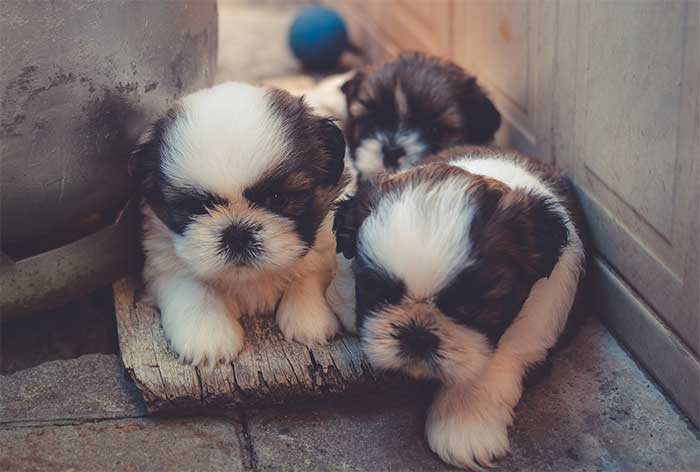
However, very often dogs need a little extra in terms of shelter. At the very least, most dogs like to have their own bed where they can retire to and know that they won’t be disturbed. Some dogs appreciate something more than this; they like a small dark space to go to where they feel safe. This is where a crate can be useful and fulfils a dog's need to have its own den. It also assists in the management of young dogs who are destructive or fearful of storms and fireworks etc.

By providing a crate, making it comfortable and cosy inside, and covering it with a blanket, you are giving your dog a dedicated small space. This is a space just for your dog, where he can feel safe and he doesn't have to share it with a human.

Select the right crate for your dog
Many dogs love a crate and will naturally seek it out. You will need to source one that is small enough to be cosy, but large enough for them to stand and turn around. If your dog’s precious toys are also in the crate, then this only adds to the feeling of security. Some dogs may be unsure at first so choose somewhere to set up the crate in the house that is accessible but not too busy, and leave the door open so that your dog can enter and exit as often as he wishes. Every time he enters, you can introduce a phrase such as ‘go to your bed’, and praise / reward him once he is in. Allow him to come out, and repeat the exercise until he is confident and comfortable about this new ‘den’. You could try to introduce the crate at feeding times and feed your dog in the crate. This will help to create a positive association with the crate and it will let your dog know that he can eat undisturbed by other pets or children.

Only when your dog is happy to enter and remain in the crate, can you start to close the door for short periods. You should never close the door if your dog is getting stressed. He needs to feel comfortable with the crate first. You can close the door short times when you are eating or, especially if introducing a crate to a puppy, whenever he is having a nap during the day. Gently place him in the crate and close the door. Your dog will soon become confident that he is safe and that you will be available to release him when he is ready. You can gradually increase the length of time to wait before releasing him.

It is worth remembering, however, that not all dogs like crates. You need to stick to your training plan whilst your dog becomes accustomed to the crate, but if your dog panics he could harm himself. Open the door and let him out and go back to having the crate door open for a while longer. We don’t recommend forcing your dog into a crate that he is clearly uncomfortable with…some dogs may never take to it.

Never leave a dog unattended in a crate for long or extended hours, this is unfair and could lead to barking or toileting issues.

Properly managed, crates can assist with toilet training
As with all training it's better to start early when your dog is a puppy, but it's never too late to try to accustom your dog to a crate. If he seems comfortable with the crate, you can use it to help with sleeping through the night and with toilet training. Dogs do not generally like to soil their own beds so, as soon as he wakes up, be ready to take him straight outside to toilet. This may mean that you are disturbed during the night for toilet duties, but it will help you get your puppy house trained much more quickly, and will gradually stop. He will also become accustomed to spending the night in his safe den knowing that you will reappear in the morning.

Providing adequately for crated dogs
If you are going to leave your dog or puppy in a crate for any length of time, you must make sure that water is available. Specially-designed water bowls are available to fit inside crates so that there is no risk of the water being overturned. Apart from overnight, it is not advisable to leave a dog of any age in a crate for more than 4 hours. If you are out during the day for longer than this, it would be best to leave the crate door open and allow you dog the run of one room such as the kitchen or utility room. We don’t recommend crates in hallways as the dog can become disturbed by postmen and passers-by which can lead to guarding and barking issues.

The benefits of crating your do
There are several benefits to crate training your dog. One of these is travel. If your dog is happy in a crate, then the crate can be used for safety in the car. It also means that your dog’s familiar sleeping place is with him if you are staying somewhere new. Additionally, a dog accustomed to a crate will be much happier being crated for airline travel.

A crate can be a fabulous tool for providing a designated resting and sleeping place. As with all training, do your research, be consistent, and never try to force your dog into something that frightens him. Your local Bark Busters trainer can help you with all aspects of crate training.

Bark Busters trainers have trained more than 1 Million dogs worldwide and are renowned authorities in addressing dog behaviour with all-natural, dog-friendly methods. Bark Busters training is the only service of its kind that offers International guaranteed lifetime support. With hundreds of trainers around the world, Bark Busters continues its mission to enhance the human/canine relationship and to reduce the possibility of maltreatment, abandonment and euthanasia. Contact your local Bark Busters dog trainer to see how they can help.

Monday, 20 February 2017

Choosing the right puppy

As Bark Busters dog trainers, we find that the New Year is a busy time for puppy training. If you are thinking of getting a puppy it is worth taking time to think about and prepare yourself for what you are taking on, and to make sure that the puppy you buy is right for you and your family. Having the right dog, properly trained, will bring you joy for years to come.

There are several factors to consider when choosing a puppy. Consider the breed you are thinking of and be sure that you can handle its size, temperament, and the amount of exercise it will need as it grows into an adult dog. Some of the registered breeds can be prone to known medical conditions so check these out before you go ahead. A cross-breed can be excellent but unless you know the size of the parents it is sometimes difficult to know how large the dog will become.

How to identify the right breeder
Talk to and visit breeders. Always buy your puppy from a reputable breeder that specialises in only one or two breeds. A reputable breeder should check your situation before allowing you to take one of the litter. They will need to know whether you have a secure garden, what time you have available for training, how much time will the dog spend home alone etc.

Make sure you can visit their premises and see the mother, and where possible the father, with the puppies. If you go to a domestic property to view a puppy, make sure that the puppies and their mother live together, and that the house has signs of dogs living there. There have been some terrible stories recently about puppy dealers, so make sure you are 100% confident that the person you are buying from is an ethical and licensed breeder or a reputable rescue centre.

As well as seeing the mother of the puppies it's advisable to see the father too. The temperament of both mother and father must be sound and of a good nature. Your puppy will inherit some of their temperament traits.

Never take a puppy under 8 weeks old if offered, as puppies need to stay with their mother and siblings for those first crucial weeks whilst they learn to interact and communicate with other dogs. This will help to avoid behaviour problems in the future. Whilst you are viewing the puppies, always try to see the whole litter at play, and be mindful that the puppy sitting on its own away from the rest of the litter may have some temperament issues that may be difficult for a first-time puppy owner to address. Similarly, the puppy that is confident and comes bounding over to you may be challenging as he likes to make his own decisions! Try to choose a puppy that best reflects your personality.

Choosing the puppy to suit your personality
The best puppy to choose would be the one who is playing with his siblings but not being too rough. If you pick him up and he is happy to be cuddled without mouthing too much or wriggling to get away, then that could be the puppy for you. If you feel that you would like two puppies to be company for each other, choose a male and a female, as that mix of a male and a female is far more compatible, than two of the same sex. If you really want two of the same sex, then, providing you are going to have them de-sexed, two males are preferable to two females, as in our experience, females are the more prevalent types we deal with when called in to address problems such as Sibling Rivalry.

Bringing a new puppy home
When you bring your puppy home, be mindful that the puppy will be unsure and scared when taken away from its mother and siblings. Be prepared for crying and whimpering and be patient. He will need somewhere small, dark and cosy to sleep, and will preferably have a small toy or blanket brought with him to remind him of his litter-mates. Our crate training article may help.

Ensure that you register your puppy with your vet and start the course of injections as soon as possible. Also, be aware of the laws surrounding identification and speak to your vet about microchipping as it is now compulsorily in the UK.

A free WaggTagg™ dog identification tag is provided with each Bark Busters Home Dog Training package.

One of the main concerns we hear about puppies is toilet training. Puppies will have lots of accidents but they won’t toilet in your house on purpose or to spite you! As with everything with puppies, this issue needs consistency and perseverance. Be prepared to go outside with your puppy in all weathers on a regular basis whilst you encourage him to toilet outside. A lot of hard work and consistency in the first few weeks will pay dividends in the long run.

Puppy training to suit your needs
If you need assistance in settling or training your puppy, Bark Busters has a training programme that will suit you and we will be happy to help you understand your puppy and why it does the things it does.

This information is brought to you by Bark Busters in the interest of good puppy management.

Bark Busters Home Dog Training has trained more than 1 Million dogs worldwide and are renowned authorities in addressing dog behaviour with all-natural, dog-friendly methods. Bark Busters training is the only service of its kind that offers International guaranteed lifetime support. With hundreds of trainers around the world, Bark Busters continues its mission to enhance the human/canine relationship and to reduce the possibility of maltreatment, abandonment and euthanasia. Contact your local Bark Busters dog trainer to see how they can help.

Sunday, 11 December 2016

Christmas: Keeping your dog safe

Christmas is fast approaching again, so we would like to remind you of some important things to consider when preparing for the Festive Season with your dog.
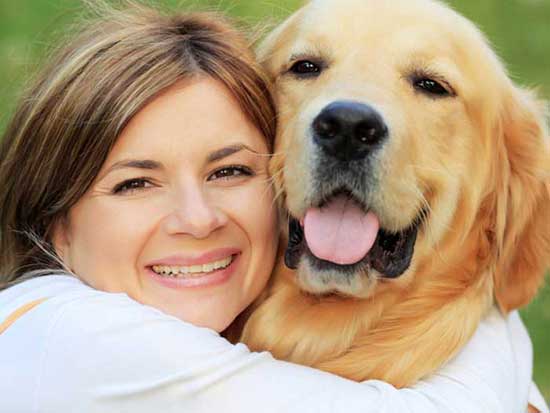
Foods
Many dried fruits are poisonous to dogs so don’t allow them access to grapes, the cheeseboard, or any Christmas cake, Christmas pudding or mince pies.

Your Christmas dinner and the lovely big turkey that has been roasting all morning will be very tempting to your dog, but be careful about allowing him to partake in this meal. Onions, including leeks, and onion powder that may be found in stuffing mixes, can cause liver damage or a rare form of anaemia in dogs. This applies to both cooked and raw onions and leeks. Additionally, gravy can be very fatty, salty and too rich for your dog, so keep him away from the gravy boat and don’t allow him to lick your plates clean!

Salt can be dangerous to dogs as they cannot process excess quantities. Especially in an older dog, too much salt can cause kidney damage. So please watch out for the bowls of salted treats and make sure they aren’t easily accessible for your dog.

At Christmas, there will be quantities of sweets and chocolate around your house. Chocolate is very tempting for dogs but it can be a lethal temptation for them! Symptoms of chocolate poisoning include hyper-excitability, vomiting, frequent urination, diarrhoea, rapid breathing, weakness and seizures. If you discover that your dog has eaten chocolate and is displaying these symptoms, contact your vet immediately. Store chocolate well out of the way of your dog, and make his Christmas treats be something more natural for dogs. Also, discarded sweet wrappers can be very tempting too. Sweet wrappers can get trapped in the stomach and digestive system making for a very sick dog, and the need for an operation to remove them.

Never be tempted to feed your dog the cooked bone from a joint or the cooked carcass of a roasted bird. Cooked bones can cause internal damage as they splinter.

Alcohol
Make sure alcoholic drinks are out of the way of your dog. Your dog may be tempted to sample the contents of a glass left on the floor or a low coffee table.

Please be mindful that, if you are drunk, your dog may not recognise you instantly as he normally does. He may be fearful of you and back away or growl at you. Try to keep your voice calm and neutral, don’t rush to touch him, and allow him to work out that it's really you.

Decorations
Please do ensure that Christmas decorations are out of reach of your dog, especially a puppy who will be interested to sample the delights of tinsel, baubles and Christmas tree lights. Also, if you’re in the process of toilet training a puppy using paper in the house, don’t leave wrapped presents under the tree as it is likely that the puppy will use them as a toilet. Don’t reprimand your puppy for mistakes like this…he is learning.

Presents
Please ensure that any small parts of toys, and any batteries are always out of the reach of your dog. If he swallows a battery, please seek veterinary advice. If you are going to buy presents for your dog, please ensure that they are toys manufactured specifically for dogs. Buy dog toys from a reputable pet shop or manufacturer and go for quality rather than quantity.

Visitors
Dogs often love visitors and all the extra attention they bring. However, please ensure that your dog doesn’t become overwhelmed with attention. Particularly watch his interaction with children, and create a safe space for your dog to retreat to if things become too much. Don’t allow anyone to approach your dog once he has gone to his safe space. You may have to be firm with visitors, but you are responsible for the well-being of your dog, and you need to be sure that he won’t be pushed to his limits. Also, if you are holding a party, ensure that alcoholic drinks and party food are not left lying on the floor where your dog can help himself…you could end up with a very poorly pooch! Very often, dogs do not appreciate loud music so be mindful of this and allow him to go to his safe space, or turn the music down.

Fireworks
Please think twice before letting off fireworks to celebrate Christmas. Fireworks are one of the main complaints we hear from dog owners; they can cause extreme anxiety to dogs as they don’t understand the loud bangs. Doing without the fireworks will be appreciated by both your dog and those that live in the area.

If you prepare yourself, and try to view the Christmas wonderland of your home through your dog’s eyes, we are sure that you will be able to enjoy a safe and happy Christmas with your pet.

Thursday, 8 December 2016

Meeting your dog's needs

As we all know, if you are a dog lover, owning a dog can be great fun and rewarding for all members of the family. However, the joy of owning a dog also brings with it a commitment from you that will last around 12 years or even longer. During that time, you will face challenges, frustrations and financial demands that may put a strain on your pockets, your relationship with your dog, and sometimes even your relationship with other members of your household!

With a view to minimizing any potential challenges and frustrations, we would like to offer some advice on how to ensure that your relationship with your dog is the best that it can be, so that you have a happy, healthy, well-behaved dog who will, in turn, offer you years of loyalty and joy that only dogs can bring.

Firstly, when choosing a dog, ensure you have some knowledge of the breeds available to you. Choose a dog that is most likely to fit into your lifestyle by reviewing their potential size, cost of feeding, amount of exercise they are likely to need, and ensure that you have sufficient room in your house and sufficient levels of income, fitness and time to be able to accommodate their needs.

Having considered these factors and decided which breed of dog is right for you, you will be on the right track for bringing into your home a dog who will be easily loved by all members of the family. Your dog will be a positive addition to your life providing you ensure that you are fulfilling his/her basic needs. Our Bark Buster trainers meet hundreds of dogs every week in their homes where their behavioural issues are causing their owners stress, tension and frustration. One of the first things we will explain to you is this; a big step towards a better-behaved dog is to ensure that their four basic needs are being addressed.

Feed your dog a good quality food. Do your own research and do not be persuaded by high-profile television advertising. Feed the best food you can within your budget, and consider visiting the independent comparison website www.allaboutdogfood.com where you can view most of the available dog foods and compare their ingredients, ratings and price. Also worth remembering is that, just like humans, dogs can fail to thrive, or even develop behavioural issues if fed a constant diet of low quality, processed food. Don’t be afraid to add in some fresh vegetables, fish, meat, and even some fruit. Again, do some research on what to feed and what to avoid before you start doing this.

Dogs are sociable animals that thrive in family units (or packs). Once they live in your home with you, then is what they perceive as their family unit; you become their pack. They won’t view you as humans who are naturally in charge in the human world…they simply see you as other members of the unit. Just like you, they instinctively know that the unit needs to be safe, but unlike you, they won’t automatically think that, because you are the adult human, you oversee the safety. In the dog’s eyes, for the family unit to be safe, there needs to be a leader. If your dog doesn’t see you as a leader – if he can train you to respond to his demands, yet ignore your commands, then he will start to regard you as a weaker member of the family and will feel it is his duty to step up and take charge of safety and security of the family both inside and outside the home. This can lead to many problems including nuisance barking, aggression towards other dogs or people visiting, poor leadwork, and poor recall. So, to give your dog a feeling of safety, it is important that he regards you as a good leader who he respects and feels he can depend upon for consistent and wise guidance.

If you decide to own a dog, you have a duty to ensure that your dog has a warm, dry, safe shelter protected from all elements. In the UK, most dogs live inside our home, unlike their counterparts in other countries. Clearly this naturally means that, as a dog has access to the house with the humans, he will have adequate shelter. However, some dogs, especially nervous dogs or those in households with young children may appreciate a small, dark space of their own where they can take themselves away from the family hullabaloo, and relax. Your Bark Busters trainer will happily explain to you the benefits of creating an indoor pen for your dog who may benefit from a smaller space within the house where they can retire and safely relax.

Every dog needs to be trained for them to live harmoniously with humans. This doesn’t mean that you need to turn your dog into a machine, or that you need to be a dog trainer to own a dog. However, you should ensure that you can train the basics. You Bark Busters trainer will be able to help with this. Training can also be fun and entertaining for your dog. By using his brain, he is using energy. Playing with your dog, and training him provides him with mental stimulation and builds up your bond. He learns how to respond to your commands, and learns that the correct response brings praise and reward. By learning through positive interaction, your dog will be much more responsive to you. He will also be mentally tired after a training and play session and this will help to alleviate potential problems of an under-stimulated, under-exercised dog who could become destructive.

By ensuring that you meet your dog’s needs, you can avoid many of the potential behaviours that can harm our relationships with our dogs, and look forward too many years of happy dog ownership. Also, don’t forget that, by meeting his needs, you will have years of unconditional love, someone also pleased to see you, and someone who always wants to go out with you and be in your company.

Bark Busters trainers have trained more than 1 Million dogs worldwide and are renowned authorities in addressing dog behaviour with all-natural, dog-friendly methods. Bark Busters training is the only service of its kind that offers International guaranteed lifetime support. With hundreds of trainers around the world, Bark Busters continues its mission to enhance the human/canine relationship and to reduce the possibility of maltreatment, abandonment and euthanasia. Contact your local Bark Busters dog trainer to see how they can help.

Wednesday, 7 December 2016

The Festive Season & Dogs

It’s that time of year again! Christmas is fast approaching, and the season for after-work drinks, get-togethers and parties is about to begin. Obviously, we all want to enjoy this time of year; but do spare a thought for your four-legged friends as they don’t understand the changes that may occur in your routine and your behaviour. We’ve put together some advice for you to ensure that you keep your dog safe, comfortable and happy during your seasonal celebrations.
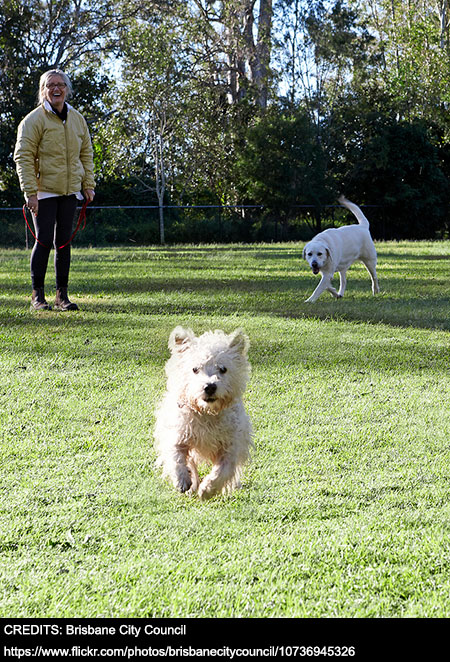
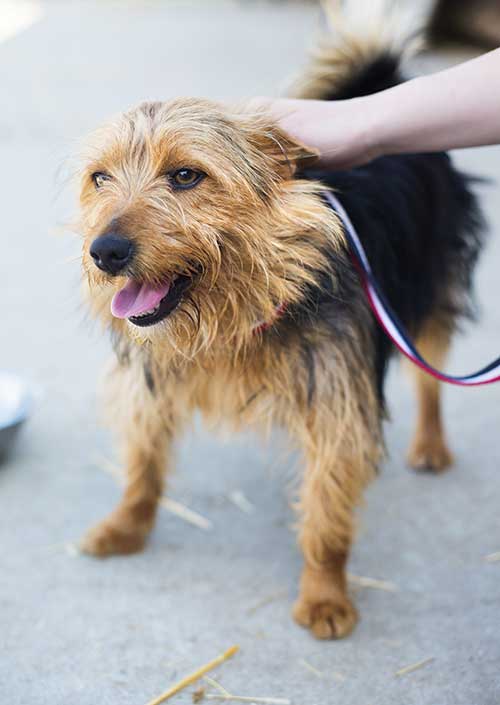
If you are going to go out with colleagues after work, your dog may be home alone for much longer than usual. This could result in him missing his dinner time, or being unable to get out to toilet. Try to arrange for somebody to call in to feed him and let him out. If they are willing, they could take him out for a short walk too, or stay and play with him for a short while. Don’t ask someone who is a stranger to him though…make sure your dog has met them before and is comfortable with them coming into the house. You may ned to plan this in advance.

However much we enjoy our nights out we should remember that we still have responsibilities towards our dogs. Returning home drunk means our body language and demeanour can change considerably and your dog may be confused. In extreme circumstances, he may not recognise you and may growl or even bite you! You should make every attempt to communicate with your dog as normally as possible to ensure that he recognises your voice tones. Dogs rely on scenting to know who's approaching and this can be masked with the smell of alcohol. This coupled with the swaying walk of being drunk can cause your dog to become very confused and he may not recognise you. You should also ensure that you are not too inebriated to let him outside before bedtime, and that you can check that gates aren’t open to enable him to escape.

Also, please remember that it would be unfair to reprimand him for jumping up at you and knocking you over. He may become excitable because events are not as they usually are. Remember, it’s not his fault he’s knocked you over…it’s because you are unsteady on your feet! Also, if he has had a little toilet accident, don’t punish him. He could have been left alone for a lengthy period so it's better to clear up and forget about it. If your dog has chewed or destroyed something in your home, and this is not his normal behaviour, don’t assume that he has done it for spite – dogs don’t think like that. He may have become stressed by the amount of time he has been alone.

When you own a dog, lying in bed nursing a hangover sadly isn’t an option unless you have another member of your family willing to take on the morning duties. Your dog will wake up at the same time as he always does, want to be fed and let out. Don’t punish him for this as he won’t understand what's wrong.

House parties are great fun for humans, but this is not the case for all dogs. Your dog may be sociable and love parties, meeting new people, and being fussed by visitors, however, do try to keep an eye on what he may be eating and (more importantly) drinking! People who don’t own a dog may think it fun to feed your dog from the buffet, but they don't realise that it may be harmful to him. People will also place glasses of alcohol on the floor beside them whilst they are chatting – be vigilant about this, as your dog could become very ill from drinking alcohol. If you have a dog who isn’t that sociable, and is likely to become stressed by lots of people in the house, make sure you have a safe place for him to retire to, away from the party. Ensure that nobody enters his space without your permission – so don’t put him in a bedroom where the coats are being stored! Were somebody to get bitten it would spoil your party and your relationship with that guest. It could cost you a lot of money too! If possible, let him go and stay with a relative or a boarding kennel where he will be properly looked after and kept safe.

If you are out walking your dog in the evening, then you may come across drunken revellers in the street. Their noise and antics may unsettle your dog. Try to keep your pace, take a wide berth, don’t automatically tighten the lead and simply walk past them in a clam manner. This will give your dog the message that you aren’t worried, and he doesn’t need to be either.

It’s a difficult time of year for dogs; dark nights, Halloween, fireworks, all bring different levels of anxiety for different dogs. If you can do your bit to try to reduce the stress of the party season for your dog, you’ll be doing him a real favour and we’re sure you’ll be happier too.

Monday, 5 December 2016

Destructive Behaviour in Dogs

Dogs who seem intent on destroying the contents of your home and garden can be very difficult to live with. As humans, we find it difficult to understand why our dogs choose to chew chairs, tables, stairs, carpets, skirting boards and walls; some dogs will tear up and chew carpets and vinyl. These can be very expensive habits for any owner to tolerate, and may even result in a dog being rehomed.

So why do dogs chew the fabric of our homes? There can be many and various reasons why your dog is behaving in a destructive way.

It could be down to boredom…if you don’t interact with your dog and don’t ensure that he has sufficient mental stimulation and physical exercise, he may look for other ways to entertain himself.

It could be due to stress…when does the chewing occur? If it is when you are away from the home, it may be that your dog is stressed and anxious about being left alone.

Diet can also have an impact…although we can see no nutritional value in a carpet or chair leg, your dog’s diet may be lacking in some nutritional components that the dog is trying to obtain from other sources.

Digging up your garden can also be caused by boredom, or by a diet deficiency.

Your Bark Busters Home Dog Training therapist will talk to you about addressing your dog’s basic needs including diet, entertainment and education, and safety. For your information, we have produced a separate article covering these needs and how you can ensure that you are meeting them.

If your dog’s destructive behaviour is caused by boredom, then ensure that he is receiving enough attention, positive training and mental stimulation. Once this type of stimulation is sufficient, your dog will be tired and able to relax and sleep. However, there will still be times during the day or the evening when you may want to provide your dog with something that will entertain them whilst you are busy doing other things. For these times, you may want to consider a  GameChanger™ dog toy that you have stuffed with something healthy and tasty or a Kong which you can freeze to entertain for longer. Licking the frozen contents out of the Kong will keep him occupied for hours. There are also many brain training games for dogs on the market. These will keep the dog mentally stimulated as he tries to work out, and follow the procedure for extracting the treats from the toy.

These forms of entertainment for your dog are also effective If your dog tends to be destructive only when you are away from the home. But, where this is the case, it is also worth trying to discover why your dog is so anxious about being left. Occasionally we meet dogs who are too stressed to engage with food or mental stimulation whilst their owner is absent. Sometimes we need to try other things to try and reduce the anxiety that a dog is feeling. These may include providing a covered pen area to create a small dark space for a dog to relax in, ensuring that he isn’t left either with the full run of the house, or any places in the house where he might feel threatened, like the front window or front door. For dogs who behave in this way, it is never a good idea to allow them access to the hallway or landing where they may feel that they are on guard duty. Remove his exposure to as many outside noises and sights as possible by closing blinds, and leaving the radio on so that outside noises are muffled. Also, start to try to separate from your dog from time to time whilst you are in the home, by putting him into the kitchen, or into his pen so that he becomes accustomed to not being with you permanently. Start with just a few minutes and gradually build up. Don’t make a big fuss about leaving him and, when you allow him to be with you again, give him some mild praise for his achievement.

There is nothing to be gained from rushing in and shouting at a dog who has chewed the carpet whilst you’ve been out at work. He won’t know why he is being shouted at! Instead, take steps to try and avoid this type of behaviour either by trying some of the ideas mentioned above, or employ a dog walker to come and take your dog out whilst you aren’t available, try spraying your furniture with bitter apple spray to discourage him from wanting it in his mouth.

If destructive behaviour is something you don’t seem to be able to stop, you may need to call in a professional to help you ascertain the reasons for it. Your local Bark Busters therapist will help you to see what is going on for your dog, and why he behaves in this way. Finding out the dog’s motivation for destruction is the key to ending the problem, and will ultimately prove much less expensive than constantly needing to replace the furnishings.

Bark Busters trainers have trained more than 1 Million dogs worldwide and are renowned authorities in addressing dog behaviour with all-natural, dog-friendly methods. Bark Busters training is the only service of its kind that offers International guaranteed lifetime support. With hundreds of trainers around the world, Bark Busters continues its mission to enhance the human/canine relationship and to reduce the possibility of maltreatment, abandonment and euthanasia. Contact your local Bark Busters dog trainer to see how they can help.

Manage off lead dogs

Lee Hardy, Bark Busters Home Dog Training Derby:

I’ve been training dogs, as a Bark Busters trainer, for over 16 years. I have come across all kinds of breeds and all kinds of issues. Dog owners who call on me for help want their dog to be well behaved both at home and in public, whilst retaining their spirit and love of life. They want to be able to walk their dogs without fear of embarrassing or dangerous incidents. This means that they will be working hard to train their dogs in public spaces. Much of the outdoor work they do will involve their dog being on a lead whilst they perfect their training. What I find is that their attempts to practise are often disrupted by a situation beyond their control.

Without doubt, the most serious challenge to owners and their dogs comes from approaches by off-lead dogs. It is the number-one frustration for many dog owners. They ask me how to handle approaches by dogs off-lead, who persist at encroaching into theirs, and their dog’s personal space causing, at best, chaos or, at worst, a confrontation or fight. My advice to them is to remain calm and to call to the other dog’s owner to “come and get your dog!”. Expletives are tempting but not to be advised if an owner-confrontation is to be avoided! Clearly, I want my customers to be able to get themselves out of a difficult situation with the minimum of stress and confrontation possible, but they may well be panicking as their dog is reacting to the unwelcome approach from an uncontrolled dog. An adrenalized owner trying to control an adrenalized dog is the last thing that a dog trainer wants. It can be a recipe for disaster, set training back by weeks and undo lots of hard work!

When you see a dog on lead in a public space, the chances are that the dog is on his lead for a reason. You must remember that not all dogs are sociable. Some may be nervous or even fearful of other dogs, and these are states of mind that can cause aggression. I rarely see aggression from a well-balanced, confident dog – they don’t feel the need to protect themselves. I can also state with absolute certainty that a dog off-lead is far more likely to be attacked when approaching a dog on-lead. This is because the dog on the lead cannot escape. He has lost the ability to run away, his ‘flight’ option, and only has the ‘fight’ option available to remove the perceived threat!

You may cheerfully call out that your dog is “friendly”, “only wants to play”, or “just wants to say hello”. I can say with certainty that the people on the receiving end of this unwanted approach, don’t care about your dog’s friendly personality; they simply want him out of their space to avoid conflicts.

If your dog won’t listen to you when off-lead, and rushes up to any dog he sees, then he should not be off-lead. With new legislation in the UK, your dog is "out of control" and consequences could be dire for both you and especially for your dog. You must have control of your dog in public spaces at all times. As a good dog owner, not only is this your moral responsibility, in consideration of other people and their dogs, it is now also your legal responsibility. If either you or the other dog owner were to be injured during a dog fight, inadvertently or not, the consequences can be catastrophic both legally and financially.

I understand that you want your dog to enjoy time off the lead, and to have exercise, but you must train your dog, ensure that you are always in control and ensure that he will come to you when called, no matter what the temptation. Responsible dog owners that are out and about doing this very training don’t deserve their hard work to be undone by those who allow their dogs to be out of control. If you need help it's important to call a trainer.

Until you have complete control, if you see a dog on a lead, please be considerate and put your dog on a lead too and help to ensure that all dog owners and their dogs, whatever their temperament, or however far along with their training, can enjoy public spaces.

If you feel I can help you with this, you can call my team on 0808 100 4071 who will discuss your needs and explain my service without obligation.

Alternatively, please do visit my website http://www.barkbusters.co.uk/dog-training-derby where you will also find lots of helpful information.

Monday, 21 November 2016

Alabama Rot Deadly Disease To Dogs

What is Alabama Rot?
Alabama Rot or CRGV (cutaneous and renal glomerular vasculopathy), is a canine disease that causes blood clots to form in blood vessels causing damage which leads to tissue damage. 

An extremely dangerous disease, its cause is currently unknown, but it can affect dogs of any breed, size or age. Unless spotted early, the disease can quickly develop and lead to kidney failure and death.

The disease was first identified in greyhounds in the USA during the 1980s. The first cases to be identified in the UK appeared in 2012 and has since spread across England, with cases identified randomly by area and breed. As no exact cause for the disease has yet been established, developing a vaccine has not yet been possible

What are the Symptoms?
Early symptoms are a noticeable swelling of an area, skin lesions, patches of red skin or open and ulcer-like sores. Often, these will present on the dog’s legs, below the ankle or knee, or on paws; but they can also be found on the face, mouth, tongue, lower chest or abdomen.

Later symptoms, such as tiredness, reduced appetite and vomiting can be signs of oncoming kidney disease. These symptoms can occur quickly; within 2-7 days.

What can I do to protect my dog?
There is currently no vaccine developed against this disease. Current advice is to wash wet or muddy parts of your dog after a walk even though it is not yet known whether washing prevents Alabama Rot. Wash your dog in lukewarm water and avoid strong chemicals. In addition, remain vigilant; if you notice skin lesions or any of the symptoms described above, take your dog to the vet for immediate advice. Your vet will decide whether to treat with antibiotics, dressing, or whether referral to a specialist is necessary. Some dogs are able to fight the disease and recover but, sadly, others will go on to develop kidney failure at which point there is little that can be done. There is currently no evidence that the disease can be transmitted from one dog to another but if in doubt, contact your vet.

Veterinary specialists, Anderson Moores, who are based in Winchester seem to have made the most extensive studies of the disease in the UK to date. Their findings, up-to-date advice sheet and images can be found on their website http://www.andersonmoores.com/about/article.php?u=W9ZXAJV7R47E9NC25GHZ . There is also a dedicated website http://alabamarot.co.uk where you can find images of what to look out for, information relating to the latest research and the number of cases in your area.

Bark Busters trainers have trained more than 1 Million dogs worldwide and are renowned authorities in addressing dog behaviour with all-natural, dog-friendly methods. Bark Busters training is the only service of its kind that offers International guaranteed lifetime support. With hundreds of trainers around the world, Bark Busters continues its mission to enhance the human/canine relationship and to reduce the possibility of maltreatment, abandonment and euthanasia. Contact your local Bark Busters dog trainer to see how they can help.

Monday, 14 November 2016

Greeting Unknown Dogs - Training Tips

If you are a dog lover, which you probably are if you are taking the time to read this article, you will enjoy greeting new dogs you meet whilst out and about. However, attempting to greet a dog in an inappropriate manner could cause you all sorts of problems, and could also put you, the dog, and the owner at risk.
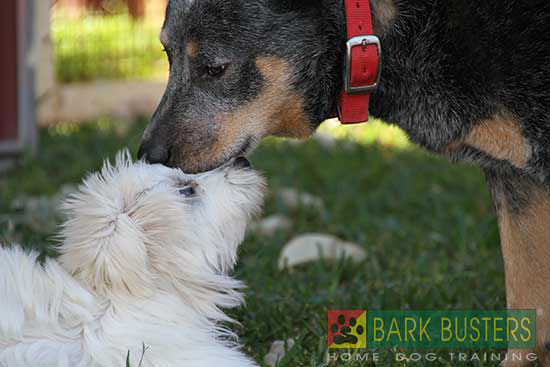
Dogs are taught by their mother from an early age, on the appropriate way to greet other dogs. As the time is getting shorter when a puppy is removed from its mother some dogs don't learn this valuable life lesson. When dogs meet, they do not normally rush in face to face. They know the rules of the canine world and respond accordingly. Dogs meet side on in relative silence. There will be little or no direct eye contact and no hugging. There will be sniffing! Some dogs will show respect to another dog by lowering their height and even sometimes rolling over to show their belly. These actions demonstrate that they are not a threat and the greeting will proceed according to the canine rules.

As humans, our behaviour is usually the opposite of this. Humans are of the primate world and our greetings are face-to-face, with eye contact, voice and hand movements. When we use this behaviour to greet a member of the canine world, our friendly signals may not be understood as such. For example, when we bend over the top of a dog, gaze into his eyes and reach out to stroke his head, these actions could potentially be perceived as threatening behaviour by a dog, and this may cause him to react to protect himself and/or his owners from you, and could have unpleasant consequences.

When dogs feel threatened they have two options – fight or flight. If you meet a dog on lead, the first thing to remember is that he has lost the option to flight, and he knows that. So, his only remaining option to escape your unwanted approach is fight. Many dogs will issue a vocal warning before they engage their fight response. This will be a low growl which tells you to ‘back off’ and lets you know that the dog is not feeling comfortable. However, you can’t rely on this as some dogs will completely skip the vocal warning stage and may simply attack. If you’re not familiar with reading a dog’s body language, you will have missed any silent signals and it will be too late. This is often the case for children.

Clearly, if a dog is on lead with their owner you should first address the owner. The dog’s first impression of you will be gained from its owner’s response to you, and their body language. If he sees that you are friendly and don’t make the owners feel uncomfortable, he will feel more relaxed. Always ask the owners for permission to greet their dog. They will know from experience whether this is a good idea or not. Listen to what they say… we have watched in horror as children rushed up to a strange dog whilst asking the owner whether they could pet him, but were already in the dog’s space before the owner had a chance to respond. In most cases they are lucky and the dog was tolerant, but the outcome could be very different.

If and when an owner confirms that you may greet their dog, you can move closer to the dog but allow a dog to complete the final approach towards you. If he doesn’t approach, leave it there – this dog doesn’t want you to greet him. Assuming that the dog does approach, you have his permission for a greeting. At this stage remember the canine rules…

  • Don’t make direct eye contact
  • Don’t bend over the top of dog – lower your height a little instead.
  • Don’t hug the dog as this can be seen as a threat or challenge action.

Don't offer your hand to allow him to sniff. It's possible that you're simply giving him something to bite. Don't make any sudden movements and remain still whilst he takes time to sniff. You need to let any sniffing run its course, as this is how dogs interact. Wait until any sniffing stops and you see that signal from the dog that he's happy with you. If he backs off do not force your petting on him. Once he is happy with you, you can stroke him lightly. Try to avoid the top of the head or the hindquarters. If at any time you feel unsure of the dog, or sense that the dog is unsure of you, stop the interaction, slowly move away and say goodbye. Dogs can sense uneasiness, and this could cause them to react badly to you.

Equally, if the dog has allowed you to say hello and then moves away from you, he is giving you the signal that the interaction is over. Respect that and move on. Don’t keep forcing your attentions onto a dog whose body language is telling you otherwise.

It is also important to teach children the correct way to greet dogs. They tend to see dogs as cute and cuddly playthings and rush to hug them. This behaviour is very dangerous as, not only might the dog feel threatened by them, the child’s face is likely to be the first point of contact if the dog reacts. Always stay in control of your child’s behaviour around all dogs, including those that are known to them. You can read more on child safety around dogs at www.dallysays.co.uk

An ‘attack’ by a dog on a human, particularly a child, can result in prosecution for the owner and destruction of the dog. The owner could potentially face a prison sentence of up to 5 years, disqualification from owning a dog, and a fine of thousands of pounds. Please be considerate of the potential results of your actions. Follow these simple steps whenever meeting new dogs.

Bark Busters trainers have trained more than 1 Million dogs worldwide and are renowned authorities in addressing dog behaviour with all-natural, dog-friendly methods. Bark Busters training is the only service of its kind that offers International guaranteed lifetime support. With hundreds of trainers around the world, Bark Busters continues its mission to enhance the human/canine relationship and to reduce the possibility of maltreatment, abandonment and euthanasia. Contact your local Bark Busters dog trainer to see how they can help.

Monday, 7 November 2016

Sibling Rivalry - Dog Training Tips

One of the common calls we get is for help where two (or more) dogs living in the same household have started to fight. We call this sibling rivalry. Many owners never experience this but, for those who do, it can be very distressing. Not only can it be dangerous for the owners when they try to break up fights, once sibling rivalry becomes extreme, owners may be left with no option but to rehome one of their dogs.

A sibling rivalry situation can seem to appear out of nowhere. Your dogs have probably got along pretty well for years and then suddenly things change. In truth, the situation probably hasn’t arisen out of nowhere; it’s possibly been developing for months without you noticing. There are many different reasons why sibling rivalry might develop and it is worth ensuring that you understand some of the more common reasons and how best to avoid it.

Dogs living in the same household are forced to spend a lot of time together. Whilst living together can be advantageous to dogs, providing them with company when you are out, and a permanent companion and playmate, it is worth remembering that each dog is an individual and that dogs do not think in the same way as humans.

It’s a good idea to allow the dogs some time away from each other from time to time; so separate areas in the house, or separate crates can be arranged so that dogs have the opportunity to take themselves away from another dog that might be causing them stress. You can also try to introduce the odd walk, or playtime with you that doesn’t include the other dog but, again, this must be done fairly and alternated between the dogs. For the dog that isn’t out with you, leave a brain-training game, or a toy stuffed with treats to mollify and entertain him. Another benefit of separating the dogs for your attention is that you can use the play time as a chance to do some useful training. It is often difficult to train two dogs at the same time as they distract each other and, between them, can get the upper hand. Train each dog separately and ensure that they respond to your commands.

It is vital that you do not give preference to one dog over another or allow privileges to one dog and not another. The rules must be (a) clear, (b) consistent and (c) applied equally to all. Treats and toys and food must be fairly shared amongst all the dogs, and access to your attention must also be equal. Every dog in your household needs to be trained to respond to your commands. If you don’t train your dogs, so that they listen to you, they will look to each other for leadership and direction, and this is likely to cause you major issues.

When a younger dog comes into a household with an established older dog, you may notice that the older dog is automatically given status by the younger dog. The younger dog will follow the older one around, and will learn from him the rules of the household. This may include acceptable behaviours and manners around other dogs, where to toilet, and feeding etiquette (eat from your own bowl, not mine). However, as the years pass, your older dog’s leadership will start to wain in the eyes of the younger one, and he may start to challenge the older dog. It may go so far as to take over the older dog’s bed, snarl at him in doorways or when there is food around, or prevent him from having his favourite toys.

A worst case scenario is that the above can be just the start to behaviours that may escalate into fighting. If you notice these signs, ensure that the older dog has the opportunity to take himself to a safe place but, most importantly start to address these behaviours. Sibling rivalry isn’t limited to being between older dogs and younger dogs. It can happen at any stage in dogs’ lives when they live in the same space

If necessary, put in place some emergency measures to separate the dogs and keep them safe. Look out for the triggers such as food, a favourite toy, prime spot in front of the fire and try to change things so that the triggers are removed. Also get your dogs’ health checked by your vet. It could be that the dog being attacked is ill

The first thing to remember when owning multiple dogs is that you, the human, must be in charge. All of the dogs must recognise that you are the leader and know that there is no leadership to fight for. As we have said in previous articles, dogs are great people trainers. We can find this cute and funny, but it is often the cause of many cases of sibling rivalry. Look at your situation; do your dogs demand attention/actions from you? And do you respond? Do they become more demanding if you try to ignore them? If the answer is yes, then your dogs have been busily training you and now think that you are their hand maiden rather than their leader. They may start to fight over your attention or your belly-rubbing services, or fight over who sits on you on the couch. You need to take back some authority very quickly and you may need to seek the help of a dog behaviour professional.

If you need help with this or any other issues, please give us a call on 0808 100 4071. Our trainers will be happy to help you.

Monday, 31 October 2016

Don't Confuse Your Dog!

As Bark Busters trainers, one of the most common things we hear from dog owners is "My dog doesn't listen to me".

If you have heard or read about the Bark Busters system of training, you will know that it is founded on communication; voice tone and body language. This leverages the natural communication which works for dogs and has done for thousands of years. Dogs tend to behave consistently and respond consistently to similar triggers. Very often it is we humans who cause the problems by using a combination of inconsistent commands and differing rules depending on how busy / tired / stressed / lazy we are feeling.

The result of this inconsistency is that your dog is probably listening very hard to what you are saying, willing to do as you ask, but is totally confused about what is expected of him.

So when you think that your dog doesn't listen, it could be that you are confusing him by using inconsistent commands and failing to praise his success. For example, you may use 'no' to tell him to stop doing something, your partner may use 'stop it', your children might just shout his name. All of these commands could be interspersed with the odd 'A-ah', 'put it down', 'get off', 'stop being silly'…the list goes on.

Add to this the likelihood that you all have different rules: Some of your family allow him on the couch, some don't, some allow him on the couch at night when they are tired and can't be bothered to tell him to get off: Some allow him to jump up, some don't, some encourage him to do it, some don't mind as long as they're not wearing their best clothes, and some don't mind unless he's muddy! Some of you feed him food from the table, some don't allow him to beg, some don't mind him begging as long as you don't have guests. All of these inconsistencies create a very confused dog!

The same rules around consistency apply to training. You must use simple, clear and consistent commands, and always follow with praise for success. So, if you are training your dog to sit, the 'sit' is his command, followed by 'good boy/girl'. The whole family needs to use the same command, 'sit'. There should be no 'sit down', 'are you going to sit for me?', 'sit down, please', as you will start to confuse your dog with too many different words. If you are starting from scratch, and your dog genuinely does not understand the command, then you can use some gentle manual pressure to place your dog in the sit position, accompanied by the verbal command and then praise when he sits. Your dog will soon get the idea.

Another important point is that your dog's name is not a command. So, if you are calling your dog by shouting his name over and over again, your dog will almost certainly hear you but not be certain of what you want him to do. He may come to you – or not. Calling him in this way from the lounge to the kitchen might work as he may be interested enough to come and see what you are up to or whether you have something for him, but it may not work in the park where he is more interested in new people, dogs and smells. Decide on a recall command such as 'Rover, come!', or 'Rover, here!', use it consistently whenever you want your dog to come to you, either in the house or out and about, and remember to praise him when he does come so that he understands he is doing the right thing.

We recently met a dog owner whose dog was 'not listening to him', and whose barking was driving the owner to distraction. When we met their dog, he was barking as expected. The owner's command for stopping this behaviour was 'sit!'. The dog did indeed sit, but carried on barking. The client was exasperated by the dog's failure to stop barking. But the dog WAS actually listening to the owner and sitting as requested. He had no idea that 'sit' meant he should stop barking - and why would he? Once we had explained this to the owner he could see immediately that he was not communicating well with his dog, and was soon able to change his own behaviour.

Most people's dogs will listen once their owners learn to communicate clearly and consistently. If it helps, write down your commands so that you, and the rest of the family, know what they are and when to use them. Don't allow variables to creep in.

Of course, if you need any help, you can call us and we would be delighted to help you with teaching you how to train your dog and be consistent. We know that your dogs will thank you for it!

Bark Busters trainers have trained more than 1 Million dogs worldwide and are renowned authorities in addressing dog behaviour with all-natural, dog-friendly methods. Bark Busters training is the only service of its kind that offers International guaranteed lifetime support. With hundreds of trainers around the world, Bark Busters continues its mission to enhance the human/canine relationship and to reduce the possibility of maltreatment, abandonment and euthanasia. Contact your local Bark Busters dog trainer to see how they can help.

Tuesday, 25 October 2016

Managing your dogs fear of fireworks

Bonfire night takes place traditionally on 5th November but, as we all know, nowadays, fireworks can be seen and heard for weeks before and after that date. Whilst fireworks are attractive and exciting for humans, dogs generally are far less keen and are unable to make sense of the loud bangs and explosions taking place in their normally quiet lives.

Dogs can become very worried and even distressed by loud bangs. Obviously there is little you can do to prevent the fireworks going off around your home, but you can take some steps to minimise the stress for your dog.

Firstly, during firework season, it may be worth trying to alter your routine slightly so that instead of walking your dog during the evening, try to walk her before 7pm, or much later at night so that you are not out and about during peak firework times. If you are out when fireworks go off, keep a tight grip on the lead, but keep the tension down the lead loose so that you don’t let your dog think that there is something to worry about. If your dog is uncomfortable, return home.

Whilst you are all at home, keep the curtains drawn and the television or radio on. These simple steps can help to reduce your dog’s exposure to flashing lights and loud explosions. It’s also important to try to behave as normally as possible and not show any reaction yourself to the noise outside. Your dog will become more anxious if you show that you too are disturbed by the noise. Similarly, don’t over fuss your dog. Your dog will see this as abnormal behaviour and will think that there must be something to be worried about.

If being in the room with you with curtains closed and the television on is not sufficient to keep your dog calm, she may take refuge under a table, behind the sofa, or in her crate. If she does this, just leave her alone, and don’t stress her more by trying to coax her out. Just behave as though everything is normal and she will pick up on your demeanour and feel more comfortable.

Ensure that your dog has no access to outside doors as she may bolt in fear once the door is opened. In case this does happen, make sure your dog is wearing a collar and ID tag so that she can be reunited with you.

Make sure your garden fencing is secure and that gates are locked to prevent your dog escaping in panic from the garden. It’s preferable to keep your dog indoors when you know there will be fireworks. It’s a good idea to ensure that the door to the house is left open for the dog whilst outside so that she can make the choice to bolt into the house rather than out into the road.

Taking steps to ensure that you shelter your dog as far as possible from the noise of fireworks will help to alleviate the potential for extreme stress, and will also help to keep your dog as safe as possible throughout the firework period.

Bark Busters trainers have trained more than 1 Million dogs worldwide and are renowned authorities in addressing dog behaviour with all-natural, dog-friendly methods. Bark Busters training is the only service of its kind that offers International guaranteed lifetime support. With hundreds of trainers around the world, Bark Busters continues its mission to enhance the human/canine relationship and to reduce the possibility of maltreatment, abandonment and euthanasia. Contact your local Bark Busters dog trainer to see how they can help.

Popular Posts

Recent Posts

Categories

Latest Post

Copyright Bark Busters. Powered by Blogger.